Showing posts with label Lean Sigma. Show all posts

Sunday, September 16, 2018

No, Toyota Isn't a Six Sigma Company. No, They Didn't Create a Six Sigma System.

If you do a Google search for "Toyota Six Sigma," the first result is from a company whose URL shows its roots. The domain is SixSigma.us. That tells me their origins are Six Sigma. I would link to them, but I don't want to give them the Google juice for doing so.

Six Sigma people often latch onto Lean to create and sell something called "Lean Six Sigma" or "Lean Sigma." That's what this company does. But far too often, as this blog has documented, the Lean Six Sigma people get Lean completely wrong.

This company has created a bad, inaccurate webpage that seems designed to appear high in the Google search results (hoping the SEO benefit will lead to more sales in spite of how inaccurate the page is). They want to sell training and "Belt" certifications (Green Belts, Black Belts, etc.).

The page is strangely titled: "Benefits of Toyota Production System (TPS)." If you find the actual Toyota TPS page, you will find zero mentions of Six Sigma... because Toyota does not formally use what the belt-peddlers would sell as a "Six Sigma" methodology. Toyota doesn't train belts. They don't do DMAIC projects. Toyota does use statistical methods, but that's due to the history of Total Quality Management (TQM).

The company uses a huge Toyota logo, which isn't their intellectual property to use.

The page starts:
"Toyota production system (TPS) is like a super charged Lean Six Sigma program."
It's NOT a "Lean Six Sigma program" and it's a stretch to say it's "like" one.
"Al the proven and intelligent methodologies of conventional TPS Six Sigma have been charged with immensely motivated team associates."
"TPS Six Sigma" is not a thing.

This is all just written so badly...
"TPS is the outcome of such powerful Lean Six Sigma team associates sigma, which leads to high performance culture and lets employees to know their full strength."
TPS is not an "outcome" of "Lean Six Sigma." I'm not sure what that sentence even means.
"Toyota Motor Corporation created this Six Sigma system..."
What Toyota created is NOT a "Six Sigma system." This page is "fake news."

This is surprisingly accurate (even a broken clock is right twice a day):
Generally, TPS consists of two pillars such as Just-in-Time and Jidoka.
The Toyota TPS page confirms those two pillars.

But, again, the page claims there is a Toyota Six Sigma strategy.


"TPS’s Six Sigma
Below discussed are some of the TPS’s (Toyota production system) Six Sigma strategies:"
I don't think this is true at all. It's been said that the Toyota dealers (independent companies) don't really use TPS. I'd like to see evidence of dealers using "setup reduction" methods.
"Dealers Participation: Toyota treats its dealers as company partner, as integral part of TPS (Toyota production system). Dealers are also well familiar with ways to decrease setup times, defects, inventories and machine breakdowns and take responsibility to render their best possible outcomes."
The article says:
"The Toyota Production System blends attitude, notion and specific techniques into a structured socio-technical Six Sigma system for manufacturing. Gradually, this Six Sigma system spread around Japan and finally to the West, and started gaining other names and variations. Toyota itself was not having any name for its manufacturing strategy until the 1970’s."
Again, Toyota did not create or spread a "Six Sigma" system. Six Sigma has American origins, at Motorola. It didn't spread TO the West. Toyota certainly didn't give the "Six Sigma" name to its strategy in the 1970s, since the term "Six Sigma" hadn't been created yet for a methodology like this.
"Contact us at [redacted] and find out how we can positively help you plan and change the culture and operations of your organization. We offer Green Belt and Black Belt training programs, as well as a Master Black Belt program."
Offering Belts that Toyota does not use or offer internally.

That page is a disaster. It's inaccurate and badly written. But, they've figured out how to game the Google search results system. The new version of "buyer beware" is "searcher beware." You'd like to think Google would point you to accurate and reputable sources, not some "fake news" Six Sigma site. What a shame.


Wednesday, May 23, 2018

Lean Can't Solve "Non Process" Problems?

On LinkedIn, a guy who teaches Lean Sigma as a "Lean Six Sigma Master Black Belt" sure doesn't seem to know much about Lean... yet he tries teaching Lean anyway. And, he's an adjunct professor at a pretty major university, to boot.

Reading his bio, he's a GE guy and a "Six Sigma Master Black Belt," which seems to be a more accurate description of his experience and his skill set.

Yet, he feels the need to try to also teach Lean. Stick to Six Sigma!

In a LinkedIn discussion, he claimed there is a "weak spot of Lean," where Lean "doesn't have much to offer for non process problems."

What?

When pressed, he said:
"What lean tools do you use when a company approaches you and says their current profit is 4% and they want it to be 6%? The answer is none, this problem is better suited for the data analytics within DMAIC. Now if my problem is long cycle time to discharge a patient that screams lean tops, VSM etc."
For one, he thinks Lean equals tools. That's a common problem in the Lean Sigma movement, equating everything to tools in a toolbox. The "Lean" in "Lean Six Sigma" often just means superficial use of Lean tools like 5S or Value Stream Mapping without understanding the underlying Lean philosophy or management system.

I replied:
"Organizations use Lean methods like strategy deployment and A3 problem solving to frame strategic business challenges without Six Sigma."
I also asked a former Toyota friend, Tracey Richardson, to chime in and she wrote:
"So one of the first questions I would ask (regarding profit margins)  how many of their KPI's are lagging indicators that they are reacting too, which is waste within that profit margin (answering the general question Mark asked not about the video).  There is really no tool involved with the question, that takes some go-see, understanding of measurements, tools come much later when we determine - what problems are we solving and how do we know.  So I agree Mark questions before tools :)"
The guy then creates a red herring by complaining:
"It’s a shame so many lean only practitioners won’t acknowledge the added benefit of the DMAIC methodology and some of the Six Sigma tools."
I never said there's no added benefit to Six Sigma or DMAIC. I just want this Six Sigma guy to stick to Six Sigma, where there is added benefit. Him teaching incorrect things about Lean isn't helping anybody.


Thursday, August 17, 2017

Another false dichotomy of #Lean & #SixSigma

As shared on Twitter... it's flatly incorrect. Lean also helps very directly reduce defects through problem solving...


Wednesday, March 8, 2017

Sometimes, Professors are Wrong Too

Just because you're an "adjunct professor at Georgia Institute of Technology’s Scheller School of Business" doesn't mean you can't be wrong about Lean.

The professor, who has a deep background in Six Sigma, maybe shouldn't be teaching about Lean. I'm not qualified to teach about Six Sigma, so I don't try telling people what Six Sigma is about.

I do know Lean pretty well.

As other posts on this blog point out, a statement like this is very incorrect... factually incorrect...

As written here:

"Six Sigma uses the DMAIC (define, measure, analyze, improve and control) method to reduce defects. Lean, derived mostly from the Toyota Production System, focuses on cycle time reduction by eliminating non-value-added steps."

The implication is that Lean doesn't help reduce defects. The implication is that Six Sigma is the only way to reduce defects. That's all untrue.

See the Toyota Production System page that explains how Lean is about improving flow AND quality. Improving flow leads to better quality. And, Lean has methods (tools like error proofing and management mindsets) that very directly improve quality.

I wish Six Sigma people would stick to teaching about Six Sigma.

Would you let a physics professor teach biology? Would you "merge" the departments into something called "Physology" or "Physics Biology?"

That's my problem with Lean Sigma... the incorrect things that get said about Lean.

I'm not against Six Sigma. I agree that Lean and Six Sigma can be complementary. But not if you think Lean doesn't address defects. Visit a Toyota plant and see...
"Six Sigma uses the DMAIC (define, measure, analyze, improve and control) method to reduce defects. Lean, derived mostly from the Toyota Production System, focuses on cycle time reduction by eliminating non-value-added steps."

The implication is that Lean doesn't help reduce defects. The implication is that Six Sigma is the only way to reduce defects. That's all untrue.

See the Toyota Production System page that explains how Lean is about improving flow AND quality. Improving flow leads to better quality. And, Lean has methods (tools like error proofing and management mindsets) that very directly improve quality.

http://www.toyota-global.com/company/vision_philosophy/toyota_production_system/
"Six Sigma uses the DMAIC (define, measure, analyze, improve and control) method to reduce defects. Lean, derived mostly from the Toyota Production System, focuses on cycle time reduction by eliminating non-value-added steps."

The implication is that Lean doesn't help reduce defects. The implication is that Six Sigma is the only way to reduce defects. That's all untrue.

See the Toyota Production System page that explains how Lean is about improving flow AND quality. Improving flow leads to better quality. And, Lean has methods (tools like error proofing and management mindsets) that very directly improve quality.

http://www.toyota-global.com/company/vision_philosophy/toyota_production_system/

Sunday, March 5, 2017

Lean Doesn't "Sacrifice Quality"

Ah, the irony of an article that seeks to dispel "myths" about Lean Sigma then going and spreading an unfortunate myth about Lean.

See this article from Quality Mag:

10 Reasons Organizations Do Not Use Lean Six Sigma

They bust a few myths, but then they say this, unfortunately:
"By only doing Lean [and not Six Sigma] you sacrifice the benefits of quality." 
No no no no no no.

This is just factually incorrect.

Again, I'll point you to the Toyota web page for the Toyota Production System.

TPS is about flow AND quality. They go hand in hand. Better flow leads to better quality, and vice versa.

Lean and TPS have so many methods and mindsets that improve quality in very direct ways, such as:

  • Error proofing
  • Andon cords (stop the line)
  • A culture of not blaming individuals for systemic problems
Stop saying Lean alone would hurt quality. Somebody who doesn't understand Lean might go "implement Lean tools" in a way that hurts quality, but that's their fault (yes, I'll blame somebody) and not the fault of Lean.

Wednesday, July 22, 2015

Nope, ThedaCare & VMMC Still Don't Do Six Sigma or "Lean Sigma"

Back in 2013, I wrote about a publication that described that Virginia Mason Medical Center does as "Lean Sigma."

As Dwight Schrute would say on "The Office":


I've very directly asked Virginia Mason's CEO Dr. Gary Kaplan if they do anything with Six Sigma and he says no. 

They use Lean, as in the Toyota Production System. No belts. No formal Six Sigma.

The same is the case at ThedaCare. I know because I've asked them. They don't do Six Sigma.

So, if an organization doesn't do Lean and Six Sigma, you can't call what they do "Lean Sigma."

It's just Lean.

There's a book on the market about Lean Six Sigma for hospitals that makes the same sloppy or misinformed error:

Does it matter? Yes, it matters. Wrongly giving credit to Six Sigma encourages people to sink time and resources into an approach that might not be necessary. If you want to use Six Sigma, then great. If you want to combine Lean and Six Sigma, go for it. 

Just don't call refer to Lean as "Lean Sigma."

Thursday, May 28, 2015

Sh*t Said on LinkedIn About #Lean, or "Professors Aren't Always Right"

Maybe I need to start a site called ShitLinkedInSays.com. There's a lot of misinformation spread around by people in LinkedIn groups about Lean and Six Sigma. It's really frustrating.

Here's one of the recently laughable things I read in a discussion that started with the false "Lean = Speed" and "Six Sigma = Accuracy" dichotomy that I mentioned before.


That ugly PowerPoint slide is wrong. Factually incorrect, as I've said before - just look at Toyota's own Toyota Production System website and you'll see that Lean is about flow AND quality at the source.

Here's the comment.... from a professor... that really kills me:


Six Sigma is a tool used to implement Lean? That's a new one...

Saturday, April 4, 2015

A Lean Sigma Book Says You Need Six Sigma to Address Defects

A book on Lean Six Sigma for healthcare talks about the eight types of waste. So far, so good.

Until the author talks about the "waste of defects" and claims that Lean addresses everything BUT defects and that you need Six Sigma to address defects.

That's hogwash.

From the book.


He talks about right sizing machines and reducing changeovers... those are core Lean concepts.

Tuesday, May 13, 2014

Lean is All About Efficiency and Not About the Customer?

Here is the usual claptrap about Lean being all about speed and efficiency.

A Lean Sigma presenter claims the following in a webinar:

He thinks Lean contributes nothing to meeting the needs of our customers? That Lean has nothing to do with product development, the Lean Startup, or quality?

The presenter then says that Lean and Six Sigma are just a bunch of tools to combine. That shows further misunderstanding of Lean.

Toyota people would say Lean is:

  1. Tools
  2. Philosophy
  3. Management System
It's an integrated system.

The presenter THEN contradicts himself a few slides later and is correct in saying that Lean is about understanding customer needs and value. Do people even listen to themselves talk and hear how what they're saying is inconsistent?


It's amazing how consistently wrong the Lean Sigma crowd is about Lean. It does everybody a disservice.

Sunday, September 15, 2013

This Lean Sigma Guy Says Lean Makes Defects Faster

A clip from a professional speaker who will go unnamed (but he is a "Lean Six Sigma" author and trainer)... in part he says, incorrectly, that somebody might say:

"We need to apply Lean to this process because we have a real quality issue." and he would respond:

"Go ahead and apply Lean to the process, you're gonna speed up your quality issue and make bad stuff faster."


This is shockingly wrong. Again, I'll point folks to the Toyota Production System website, where they clearly state that TPS (i.e., Lean) is about both Quality AND Flow.

The Lean Sigma crowd incorrectly says that "Lean is for speed and Six Sigma is for quality."

Ironically, this speaker says that "people confuse these things all the time." He's the one who is confused. He is wrong:


Update:

His book wrongly says that Lean is mainly about just efficiency and speed. This is a very common Lean Sigma fallacy:


Wednesday, August 14, 2013

Seminal Lean Sigma Book Gets it Wrong

From the cover of a well-known Lean Sigma book:


Again, it's wrong to say:
  • Lean = speed
  • Six Sigma = quality
Lean and the Toyota Production System are about BOTH speed (flow, really) and quality. See for yourself on the Toyota website.


This Lean Sigma Book Thinks Lean is Only About "Faster and Cheaper"

A diagram proposed by a Lean Sigma book:


Lean is only about Faster and Cheaper?? Wrong. Lean is about Better, Faster, and Cheaper. The Lean Sigma people ignore the quality methods and quality tools that are a core part of Lean and Toyota Production System. "Better" is not the exclusive domain of Six Sigma. Sorry, just not true.

As I say on the "About This Blog" page:

"Everyone is entitled to his own opinion but no one is entitled to his own facts."      
Senator Daniel Patrick Moynihan
The book further explains that Lean is about "productivity" and Six Sigma is about "Quality." Wrong!


Wrong!

An Ironic Complaint about "Bastardization"

It kills me to see a Lean Sigma book complain about methodologies being "bastardized" when this book does the exact same thing to "Lean."

To say Lean is only about reducing waste or that lean is only about Flow is a complete bastardization of Lean and the Toyota Production System.

It's a shame that people who don't know any better accept this stuff as gospel truth.


Lean has many principles and methods that help improve what we should be doing. The aim of Lean is to get it right the first time, every time... that's not the exclusive domain of Six Sigma.

Ridiculous.

Lean Sigma thinks Lean Six Sigma Works Well With Lean

From an unnamed book:


What a nonsensical statement from a "Lean Sigma" book. If Lean is a part of Lean Six Sigma, of course it works well with Lean???

Monday, July 29, 2013

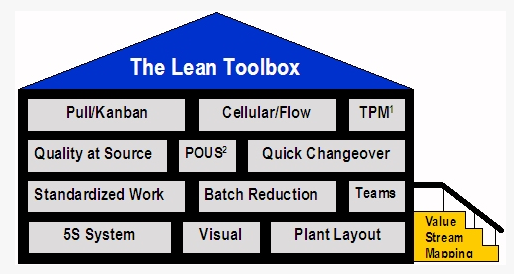
This Site Says Lean is Just a Toolbox; Toyota Disagrees

A Lean Sigma website (and many others) portray Lean as "a set of tools."


Lean Sigma people often say things like "Lean and Six Sigma are just tools in the toolbox, so you choose the one you need for the problem at hand."

The problem is that calling Lean a "set of tools" diminishes the power of this management system. There's nothing in that toolbox about the core Toyota Way principle of "respect for people." There's nothing about the management system, like going to the gemba, asking why, and not blaming individuals for systemic problems.

TPS isn’t just a tool kit; it’s a culture of problem solving at every level of the organization, from top management to the workplace.
Here is how Toyota illustrates their production system as more than tools:


It's technical (tools) as well as managerial and philosophical. It's an integrated system. 

Using tools is fine, but if you're just using a tool or two from some toolbox, you shouldn't call it "Lean."


Saturday, July 27, 2013

A Book Thinks "Mistake Proofing" is "A Six Sigma Tool"

From a seminal "Lean Sigma" book (click for a larger view):


Lean Sigma people have this bias that Six Sigma is the only methodology that can improve quality.

The bias comes out when mistake proofing is referred to as "a Six Sigma tool."

Toyota would beg to differ.

Mistake proofing ("poka yoke" in Japanese) is arguably the FIRST Lean or TPS concept that Toyota introduced to its own company. It's a core Lean methodology.

You can do Six Sigma and also do error proofing, but it's silly to think mistake proofing is "a Six Sigma tool." Good grief.

An additional thought -- real mistake proofing would prevent the error from being MADE, rather than just preventing it from being SHIPPED.

A Book Says "Lean Means Speed" & Lean Cannot Bring a Process Into Statistical Control?

From one of the seminal books on "Lean Six Sigma:"

I guess that's where the others learned this supposed "fact" to cite in their definitions of Lean and Six Sigma.

From the author's definition:


Lean cannot bring a process under statistical control? Good grief, that's not right.  Toyota does not use Six Sigma. Toyota doesn't have processes that are in statistical control?

The book furthers the falsehood that Lean is about speed and Six Sigma is for defects. We see this parroted in many other Lean Sigma books that followed.


Another comment that's incorrect, that Lean is primarily about speed:


A Website Incorrectly Claims Toyota as a Member of the "Lean Sigma" Club

From the website of a company selling "Lean Sigma" training (click for a larger view):


"a combination of the two (LEAN Six Sigma) seems to be a preferred methodology implemented by many companies around the world including Toyota."

Let's be clear -- Toyota is NOT a Six Sigma company. I've heard others claim this and it's factually incorrect.

I was a guest at the Toyota San Antonio plant when somebody asked a manager if they used Six Sigma. The manager plainly said, "NO, we use the seven basic QC methods but we don't train belts and we don't do Six Sigma."

Toyota uses statistical methods - simple ones like Pareto charts, run charts, SPC, etc.

Toyota does NOT use Six Sigma.

Therefore, you cannot call what Toyota does "Lean Six Sigma." You can't call what Toyota does "Lean Sigma."

From a Fast Company article: "SIX SIGMA STIGMA":
Not long ago, in its global pursuit of the Truth, the Consultant Debunking Unit (CDU) journeyed to Japan for a tour of the car-making facility in Toyota City. Guided by engineers, we heard a lot about the legendary quality of Toyota's vehicles. Eager to show we knew a thing or two about quality ourselves, we soft-balled our hosts with the obvious question: "When did Toyota start using Six Sigma, anyway?" 
Long silence. After some awkward consultation in Japanese, the engineers asked us, "What is Six Sigma?"
Looking back at the quote from the top of this post, I could also take issue with the "Lean is Art and Six Sigma is Science" comment, but maybe that's best left for another post.

Wednesday, July 24, 2013

This Lean Sigma Program Has A LOT of Six Sigma and a little lean

A website lists its online "Lean Six Sigma" curriculum (click for a larger view):


Far too often, "Lean Sigma" training is basically regular Six Sigma training (a rigorous and oft-helpful statistical methodology) with just a handful of superficial Lean tools.

Lean is more than a bunch of tools. Lean is a philosophy and a management system.

When the Lean component of "Lean Sigma" training is limited to 5S, the types of waste, value stream maps, and spaghetti diagrams... that's very superficial. 


Lean parts of "Lean Sigma"

Where is the talk of culture? Where is the discussion about leading differently? This is not Lean, it's just tools.

A Book Incorrectly Takes Credit for Lean Success Stories

From a "Lean Six Sigma" book:
Pioneering hospitals such as Virginia Mason, Cleveland Clinic, Mayo Clinic, and many others have started using the Toyota Production System (a.k.a., Lean) and Six Sigma to make dramatic improvements in all aspects of healthcare. SSM Health Care in St. Louis and the Pittsburgh Regional Healthcare Initiative have used Lean Six Sigma...
I know for a fact that neither Virginia Mason nor ThedaCare (sometimes also cited wrongly as a "Lean Sigma" success story. The CEOs of both organizations have confirmed this with me.  They have not used "Six Sigma" and they don't label their approach as "Lean Six Sigma."

I'm also pretty certain that PRHI has never taught Six Sigma. In fact, there is only one reference to the phrase on their website:


"Lean Six Sigma" is not the same as "Lean." Many organizations use Lean methods and management principles without doing any formal Six Sigma work.

Again, there's nothing wrong with Six Sigma. My beef is with Lean Sigma people claiming credit wrongly.

When a book from a major publisher has a factually incorrect statement like this, it leads to others spreading the same incorrect idea.